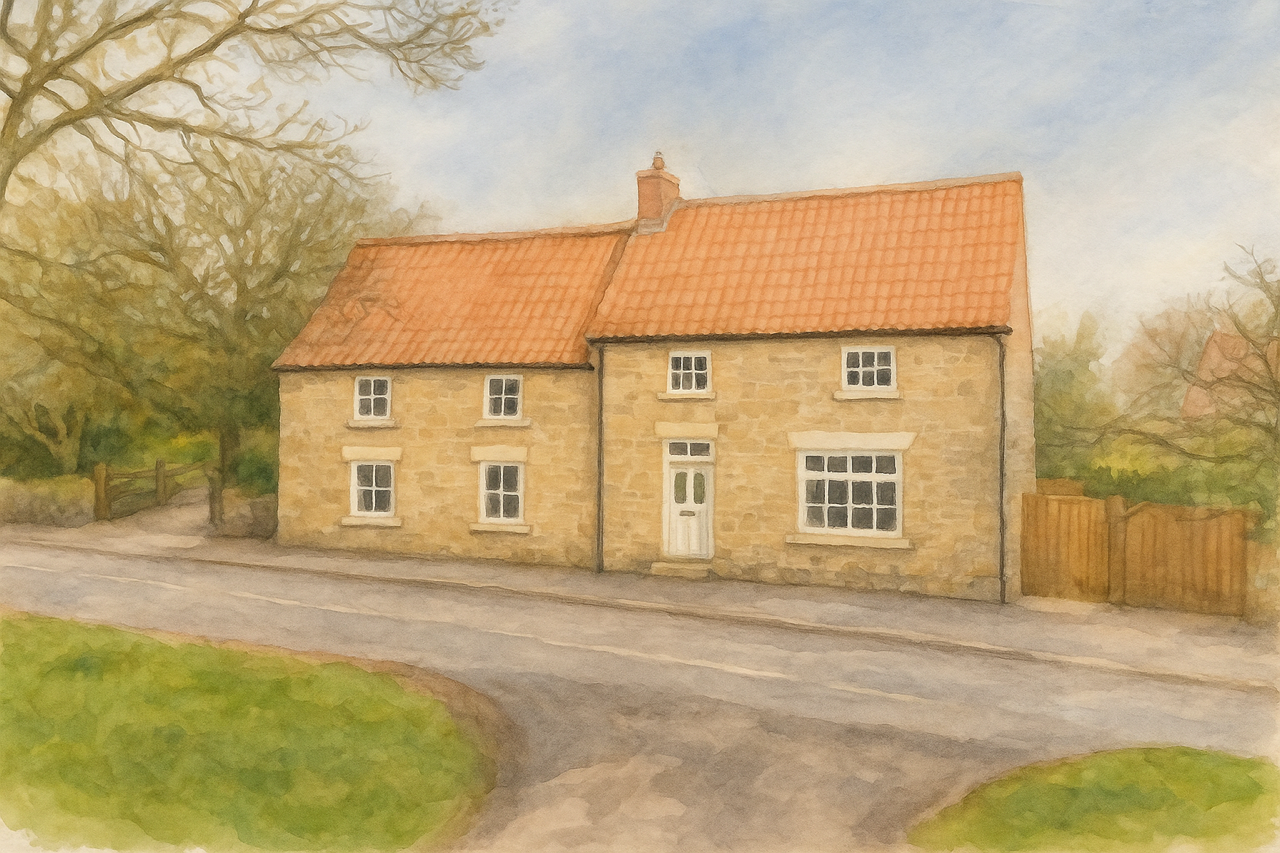
About Wilton
Wilton is a small village and civil parish in North Yorkshire, lying about 4 miles east of Pickering — 12 miles west of Scarborough and 10 miles north-east of Malton — just off the A170, in the string of villages east of Thornton-le-Dale.
The village had a population of about 149 at the 2011 census. Wilton shares the joint Allerston & Wilton Parish Council with neighbouring Allerston; the combined parish recorded a population of about 310 at the 2021 census.
Wilton appears in the Domesday Book as belonging to William the Conqueror, recorded with 47 ploughlands and meadowland. The name is thought to derive from "Wildetuna", meaning 'waste'. The Inclosure Act of 1773 provided for the division of up to about 700 acres.
St George's Church
St George's is Wilton's parish church and is Grade II listed (listed in 2011). A 13th-century church stood on the site and was largely rebuilt in the 17th century; that building was then demolished and a new church raised by the architect Charles Hodgson Fowler between 1907 and 1922 — completed around 1920 — incorporating the surviving 13th-century south arcade.
A tower was planned but never built; in its place there is a projecting wooden bell turret. Inside are a Norman tub font, 13th- and 14th-century bells, and panelling made from 17th-century pew ends.
Wilton Hall (Wilton Castle)
Wilton was once the site of Wilton Hall, also known as Wilton Castle — a medieval fortified, moated manor house. In 1335 Edward III granted John de Heslerton a royal licence to crenellate his dwelling at Wilton. The house had a wet moat on three sides and was abandoned and slighted around the time of the Civil War.
This is village history rather than a visitor attraction — there is no public access, and the land is private.
Listed buildings
Wilton has two listed buildings: St George's Church, and Prospect Farmhouse — Grade II listed, built of sandstone with a pantile roof.
The railway connection
The two villages share a railway curiosity. When the Forge Valley Line opened in 1882, its station was named "Wilton" — although it actually stood in Allerston parish. It was renamed Ebberston in 1903, and the line closed in 1950.
In the area
Wilton is a small village with no shop or pub of its own, so residents use nearby amenities: The Cayley Arms in Allerston, and the shop, Post Office and GP branch surgery in Thornton-le-Dale. For walks, towns and the coast beyond the villages, see the North York Moors guide. Parish matters are handled by the Allerston & Wilton Parish Council.
Common questions
- Where is Wilton?
- Wilton is a small village and civil parish in North Yorkshire, about 4 miles east of Pickering, 12 miles west of Scarborough and 10 miles north-east of Malton, just off the A170.
- Is there a church in Wilton?
- Yes — St George's Church is Wilton's Grade II listed parish church. A new church was built by the architect Charles Hodgson Fowler between 1907 and 1922, incorporating the surviving 13th-century south arcade.
- Does Wilton share a parish council with Allerston?
- Yes — Wilton and Allerston share the joint Allerston & Wilton Parish Council. The combined parish population was about 310 at the 2021 census.
Local knowledge welcome
Wilton is too small for a website of its own, so it has a home here. If you live in Wilton and have photographs, history or news to add, please get in touch.